Deployment Procurement
What the buying team should decide
Prepare project requirements covering the operating task, layout, setup crew, equipment interfaces, packed limits, environment and required standards.
Use the checklist to improve your specification and compare suppliers using the same product requirements.
- Define the operational task, occupants, equipment and required clear floor area.
- Map entrances, exits, connections, utilities and equipment interfaces.
- Specify deployment crew, inflation method, transport limits and packing sequence.
- List applicable standards, test methods, documents and final acceptance criteria.
Compare these requirements with our inflatable shelter system options and ask which configuration fits your deployment brief.
Prepare a project brief your team can share
Download the editable shelter project brief (TXT) and fill in the operating task, layout, interfaces, quantity, destination and acceptance requirements. Leave unknown items as “to be reviewed” and attach any applicable drawings or tender requirements. The brief helps organise your enquiry; it is not an approved specification or quotation.
Start with the operating scenario
State who will use the shelter, what work happens inside it and how long it must remain deployed. A medical integration brief, an equipment workspace and a relief distribution point can require different access routes and internal clearances, even when their outside dimensions look similar.
- Attach a site plan or annotated sketch showing the available footprint, ground conditions and any restrictions on anchoring.
- List expected occupants, equipment dimensions, working zones and the clear area that must remain after equipment is installed.
- State the destination, expected use conditions and any buyer-specified environmental or regulatory requirements. Ask the supplier to identify the test method and evidence for each proposed performance claim.
Define the interfaces before choosing a structure
Show where people, equipment and services enter and leave. Mark door openings, any connection to another shelter, floor transitions, cable or duct routes and areas that must remain unobstructed. For an inflatable option, ask for the proposed beam arrangement, valve positions, inflation equipment, anchoring plan and repair or replacement scope. These details should be reviewed for the exact layout; they are not universal specifications for every shelter.
Use the air-beam structure checklist to compare the proposed beam layout, inflation and retention checks, valves and field repair scope before approving an inflatable shelter sample.
Compare proposals on the same acceptance basis
Request a written response against one shared requirement list. This helps your team compare what is included, what still needs engineering review and what must be approved before production.
- Confirm the supplied set: shelter body, inflation equipment, anchoring items, transport bags or cases, repair items and any optional components.
- Request packed dimensions and gross weight for the proposed set, plus the crew, tools and setup sequence assumed in the proposal.
- Agree which drawings, sample checks, material or test records, packing list and pre-shipment inspection results are required for acceptance.
- Record open questions and who will approve each change to the specification before the bulk order is released.
The workshop image shows one air-beam shelter configuration under assembly, not a fixed model specification. Final dimensions, materials, performance and supplied items follow the approved project documents.
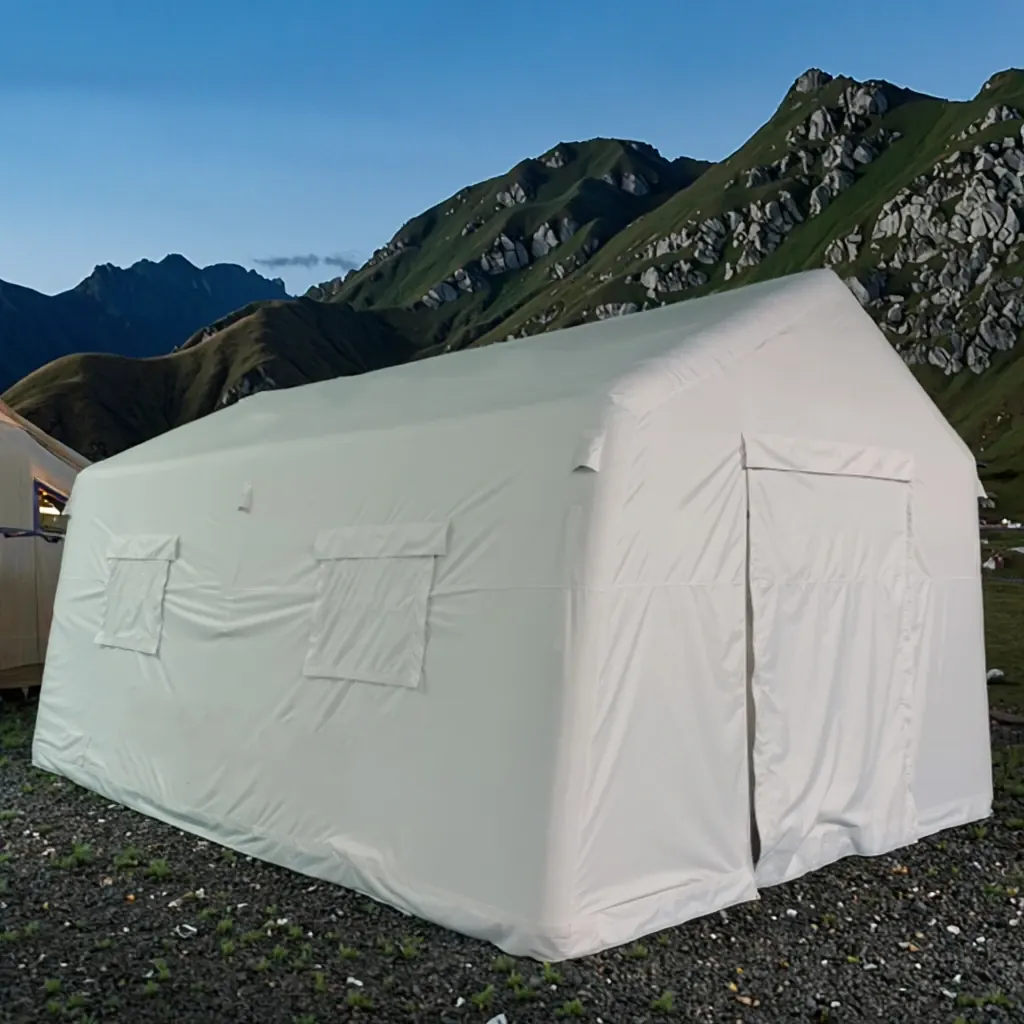
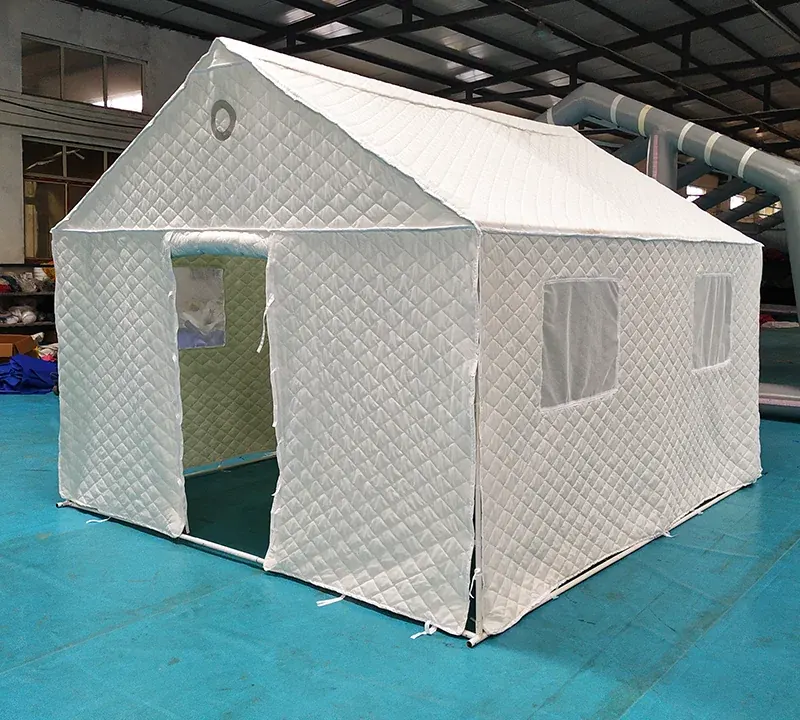
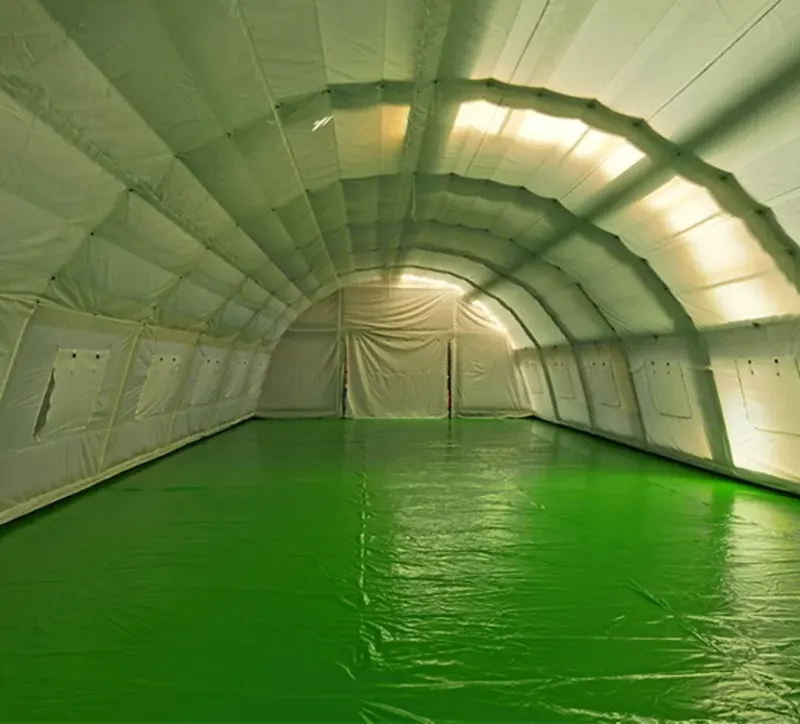
Examples of deployable shelters
Real photographs of white shelters used as references for setup, layout and packing discussions.
Questions for a deployment brief
Connect the mission requirements to structure and logistics.
- What clear area, access routes and equipment interfaces must the shelter provide?
- What crew, packed limits, environmental conditions and acceptance criteria apply?
Send the operating task, site conditions and required documents for a configuration review.
Information to attach to the RFQ
- Buyer company, destination and intended sales or operating channel
- Application, dimensions, quantity and required delivery date
- Reference photos, drawings, tender schedules or target products
- Required standards, labelling, packaging and inspection method