Engineering Review
What the buying team should decide
A technical checklist for evaluating air beam layout, pressure retention, valves, repairability and QC proof before sourcing inflatable tents.
Use the checklist to improve your specification and compare suppliers using the same product requirements.
- Check air beam layout, valve position and inflation experience.
- Ask how pressure retention is tested and documented.
- Confirm repair kit, spare parts and field maintenance logic.
- Agree the sample checks for inflation, anchoring and packed accessories.
Use this checklist alongside our inflatable tent systems overview; request evidence for the exact configuration under review.
Start with the air-beam layout, not a pressure number
Ask for a drawing of the proposed footprint and beam arrangement. Mark the clear internal area, entrances, connections and any equipment that must fit beneath the structure. The beam geometry, inflation points and anchoring interfaces should be reviewed against that layout rather than copied from a different tent size.
- Which beams form the main structure, and which parts are separate or replaceable?
- Where are the valves, inflation connections and anchoring points on the proposed model?
- How are the roof, wall, door and floor components joined to the air-beam structure?
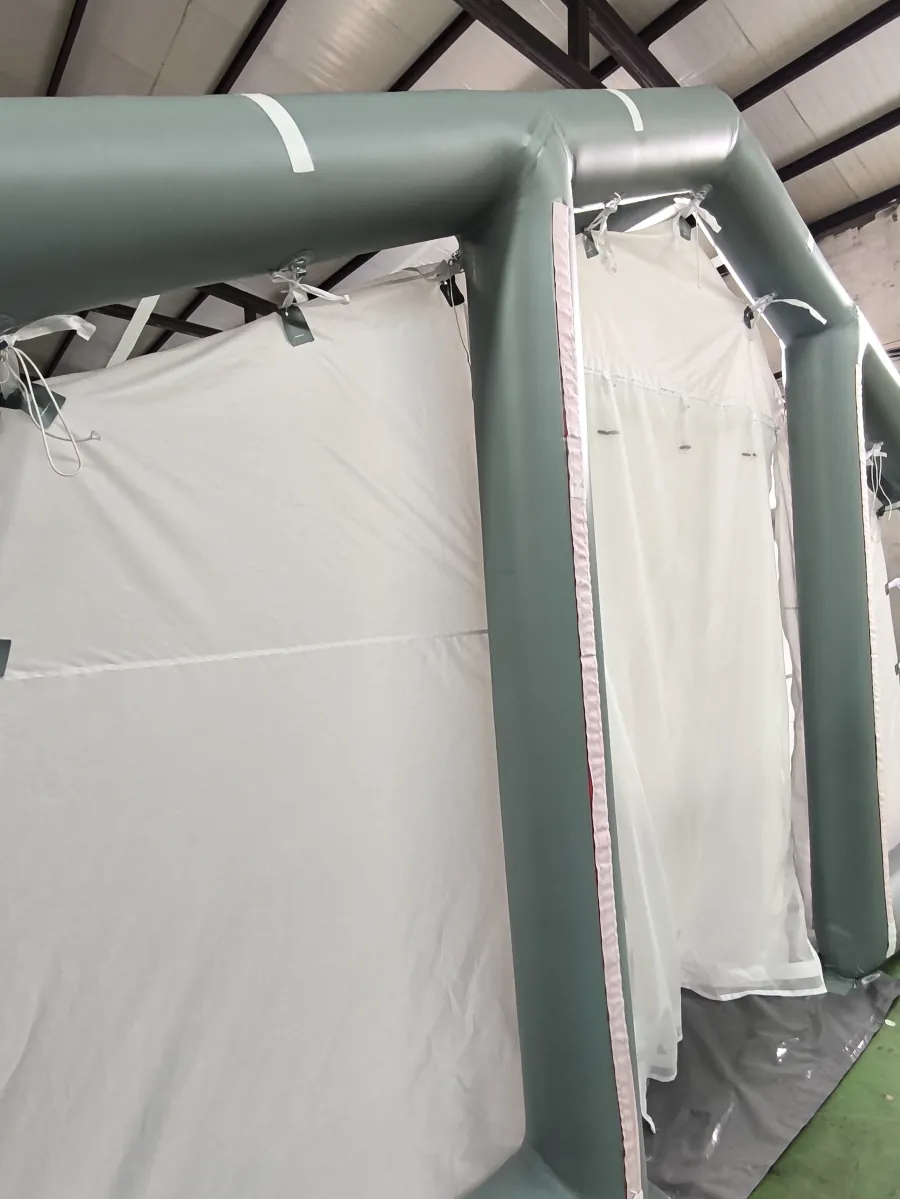
Comparing low-pressure and high-pressure inflatable shelters
“Low pressure” and “high pressure” are not enough to compare two project quotes. Our 36 m² HP field-tent reference describes high-pressure air ribs, but that reference does not define the operating pressure or construction of every shelter size. If your tender calls for a low-pressure inflatable shelter, state that requirement in the brief and ask for a proposal for that exact configuration.
- Air-beam specification: request the proposed beam construction, operating-pressure range, measurement unit and inflation equipment.
- Field procedure: compare valve positions, gauge or pump requirements, setup sequence and the instructions supplied with the proposed shelter.
- Verification and service: agree how pressure retention is measured on the sample, which repair materials and replacement parts fit it, and what records will accompany the order.
Compare those items alongside usable floor area, entrances, anchoring, packed format and the buyer's test requirements. Confirm the final values and evidence on the approved drawing, sample and written specification rather than inferring them from a product photograph or a pressure-class label.
Request a test method for the exact configuration
For pressure retention, wind performance or compliance, compare model-specific test records with your project requirements. Put each required performance item in the buying specification, including the applicable standard or buyer test method, the acceptance limit and the record your team expects to receive. Ask the supplier to identify which results apply to the proposed dimensions, materials, valves and seams.
- Inflation and retention: agree the inflation equipment, measurement point, hold period and acceptable result before sample testing.
- Anchoring and interfaces: review the site surface, anchoring method, openings and connected modules as one installation plan.
- Repair and service: confirm the compatible valve, repair materials, instructions and replacement route for the supplied set.
Connect sample approval to bulk inspection
Before approving a sample, record its dimensions, beam and valve positions, fabric and floor components, accessory list, packing method and any revisions. Use that approved reference to define the production check and final complete-set inspection. If the project has a tender or regulatory requirement, identify who verifies it and which model-specific document is needed. The approved sample and written schedule should be the acceptance reference for the order.
For the wider procurement brief, compare this structure review with the rapid-deployment shelter checklist. The factory process page shows the visible production stages that can be discussed during supplier qualification.
Questions for an air-beam structure review
Tie the structure discussion to the proposed size and setup conditions.
- Which beam layout, valve positions and anchoring points apply to this configuration?
- How will pressure retention, repairs and replacement parts be checked for the proposed model?
Send the target footprint, use environment and setup method for a model-specific review.
Information to attach to the RFQ
- Buyer company, destination and intended sales or operating channel
- Application, dimensions, quantity and required delivery date
- Reference photos, drawings, tender schedules or target products
- Required standards, labelling, packaging and inspection method